
1 Nephi 2-17 – Conception to Birth
1 Nephi 2:15 And my father dwelt in a tent.
Nephite timeline
The time has come for Lehi and company to leave their homeland, the only place they have ever known, their comfortable security is about to be replaced with the harsh realities of desert nomadic life. You all know the story. They take their tents and travel 3 days into the wilderness, pitching them in a valley by the side of a river of water flowing into the “fountain of the Red Sea” (1 Ne 2:9). They are commanded to return for the brass plates, to receive the word of God to take with them on their journey, and are successful in doing so. They return only to be told to go back to their homeland to strengthen and establish ties with friends and kindred there that will be essential on their journey. Upon returning to their first encampment Lehi, and subsequently Nephi, are given detailed revelation about the Tree of Life and the path that leads to it, as we have previously described. Nephi in particular is taught extensively about the promised land that he will eventually inherit, its future and destiny.
Finally they set out into the wilderness, never to return that way again. They have committed themselves to the path before them. The morning of their departure they are given a gift from God. Opening his tent door Lehi,
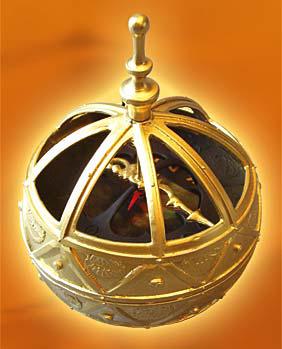
beheld upon the ground a round ball of curious workmanship; and it was of fine brass. And within the ball were two spindles; and the one pointed the way whither we should go into the wilderness.
1 Nephi 16:10
This divine compass, later named the Liahona, would become instrumental in seeing them through the journeys ahead, without which they would have been hopelessly lost in their travels.
Wilderness travel was no cake walk, they experienced untold hardships along the way. We know of at least one, Ishmael, who died along the journey, there’s the breaking of the bow, the hunger at times, the murmuring, and surviving on raw meat to name a few. Still the Lord was with them, they had gone forth in faith completely dependent on His mercy to see them through, and as Nephi testified, the Lord “did provide means for us while we did sojourn in the wilderness.” (1 Ne 17:3).
Nephi states that they “did sojourn for the space of…eight years in the wilderness”, perhaps a little longer since we are not sure how long they were in the valley of Lemuel while traveling back and forth to Jerusalem, or if this interim was included in Nephi’s calculation. Ultimately, they “did come to the land which we called Bountiful, because of its much fruit and also wild honey; and all these things were prepared of the Lord that we might not perish.” A choice respite after a long hard journey, the wilderness travel had ended, but they were just beginning on the second stage of their journey.
Individual Timeline
Leaving Jerusalem/Conception
I love these chapters for the minute details and symbology that can be equated with our own individual journey as we left our heavenly home above. Perhaps not all intended or even interpreted correctly, but to me it’s a beautiful concept and I hope you allow me some literary leniency as I share my thoughts on these chapters.
The time came for each of us to leave our own “Jerusalem”, our premortal home, the only homeland we ever knew where the throne of God resided, where our family and friends were, and set out into the wilderness of life. What an act of both obedience to the Father’s plan as well as (hopefully temporary) sacrifice, as we gave up heaven to come to hell, a place where Satan and his devils were cast out and were awaiting us, to be tested. We, like Lehi in his dream, were given a calling to leave home, and also like Lehi, we each accepted the calling, took our tent and departed in faith. I used to wonder why Nephi reiterates so many times that his father “dwelt in a tent” (1 Ne 2:15, 9:1, 10:16, 16:6). I thought that this was to emphasize the commitment of Lehi in following his covenants of obedience and sacrifice, to give all he had to follow the Lord, but maybe there is some symbolism here too? If we think of leaving Jerusalem as the point of conception, do we not all travel and reside within a “tent” of sorts as well?
Being a medical professional perhaps I’m drawn to this sort of thing, yet I find it fascinating that soon after conception the embryo starts the process of cleavage, splitting from one cell to two, then four, then eight, etc. On day three the embryo undergoes a process of differentiation, basically differentiating what part becomes us and what part becomes our embryonic home, the gestational sac, placenta, and so on. By the end of day three we have the formation of what is known as a blastocyst cavity, a fluid filled cavity surrounded by a thin walled protective covering that separates and protects us from the harsher conditions found in the uterus. If this doesn’t sound like setting up your tent on the third day of the journey then I don’t know what does! Here we are to reside, within our own “tent” for the next 8-9 months on average. Are we seeing another correlation with the 8-9 years Lehi and his family spent in the wilderness?
There’s other interesting symbology to be had here; they entered into the valley that would bear Laman’s name on the third day to set up their tent. Conception usually begins in the fallopian tubes, then slowly the embryo travels in a “southern direction”, if you will, to the uterus. Any guesses when on average the embryo enters the womb? You guessed it, day three, although implantation happens a few days later.
If we think of this valley as symbolic of the womb other symbology may have been meant here. They settled next to a river of water that emptied into the red sea. Here we have Lehi’s tent, set up next to a winding river of water, that life giving element especially in that harsh environment, that empties into the “fountain of the Red Sea”. Is it a stretch to see the symbolic representation of the embryo, with the umbilical cord extending therefrom, to its own “fountain of the Red Sea”? Ok, that might be a little too graphic description of the placenta but I hope you see the same beautiful detailed symbology the Lord seems to have painstakingly employed here.
Returning Home
What about the back and forth storyline initially to get the plates and Ishmael’s family, is there symbolism here too? To me this is the Lord’s way of giving insight on how this transition from premortality to mortality happens. If the interpretation is correct, according to the allegory, there is a period after conception that the spirit is in limbo of sorts. The journey into the wilderness/mortality has begun but there remains the ability to return to Jerusalem/heaven.
What do we go back for, what was most important in our pre-earth life to help us on the journey ahead? Well, like Nephi and his brothers, we go back for knowledge, for further teaching from our Father in heaven, for our own spiritual “brass plates” to be further written on our hearts. The teachings of Lehi and Nephi on the tree of life, the covenantal path, are also found in these chapters. I can think of no greater knowledge to emphasize just before embarking on mortality where our eternal future depends on our ability to find and walk this path, holding fast to the iron rod until we too find the tree and fall down in reverential worship.
Nephi also is told to return to establish ties with Ishmael and invite his family on the journey, particularly so they can establish future families. I love the thought that we also go back to visit friends and family, perhaps particularly the family we will eventually have on earth, our future spouse and children. Nephi went back to visit his future spouse and encourage her to start the journey with him, maybe we do too?
Wilderness Departure/Quickening
Perhaps this line of thinking answers the age old question of “When is the spirit tied to the body?” as well. When Lehi’s company is fully prepared, having the lessons they need and having further established future relationships, they are instructed to move and fully commit to their wilderness path, never to return that way to Jerusalem again. This act of moving may be insight to when the spirit is tied to the body, when the mother feels the movement of the child, what some have termed “the quickening”. Brigham Young seemed to indicate this stating he believed that “when the mother feels life come to her infant it is the spirit entering the body.” (Journal of Discourses, 17:143.)
This is further supported by “The Origin of Man” issued by the First Presidency in 1909 which stated: “The body of man enters upon its career as a tiny germ embryo, which becomes an infant, quickened at a certain stage by the spirit whose tabernacle it is, and the child, after being born, develops into a man.” (James R. Clark, comp., Messages of the First Presidency of The Church of Jesus Christ of Latter-day Saints, Salt Lake City: Bookcraft, 1970, 4:205.)
Fetal movements are felt as early as 16 weeks but with ultrasound technology we can see voluntary movements as early as 6 weeks, and fetal heart movement by 23 days! I’d like to believe when the fetus actually begins showing any movement, the quickening of the spirit has taken place, whether perceived by the mother or not. Certainly the wilderness timeline seems to support an earlier quickening than by the second trimester.
We know they journeyed for 8 years in the wilderness, plus likely the shorter interval in the valley of Laman. If years are symbolic of months of gestation we have 8 months of “post-quickening”, and about one month of “pre-quickening”, getting us to the average 9 month gestation. This would equate to an interval of some time less than a year in the valley of Laman, which seems probable. Remember that aside from the trips back to Jerusalem and the visions and dreams they had in the valley, Nephi also records he married one of the daughters of Ishmael, and we know courtship does take time. Whether at this early movement event, around three to six weeks, or after, the allegory seems to indicate the act of “moving” as integral to the eternal fusion of the spirit to the body to create a “soul”, that through the resurrection of Jesus Christ will never be parted.
Liahona/The Word
Now onto the next, and I’d say most important, event in the journey. The voice of the Lord comes to Lehi indicating that it is finally time to move on, commanding “him that on the morrow he should take his journey into the wilderness” (1 Ne 16:9). The scripture states “that as my father arose in the morning, and went forth to the tent door, to his great astonishment he beheld upon the ground a round ball of curious workmanship; and it was of fine brass. And within the ball were two spindles; and the one pointed the way whither we should go into the wilderness” (1 Ne 16:10). Before committing to the path of mortality all of God’s children are given a heavenly gift, our own personal Liahona to guide us in our journey, leading “us in the more fertile parts of the wilderness” (1 Ne 16:16).
The symbology of the Liahona has been well established. Alma the Younger taught his son Helaman about the divine compass declaring that “the Lord prepared it…to show unto our fathers the course which they should travel in the wilderness. And it did work for them according to their faith in God; therefore, if they had faith to believe that God could cause that those spindles should point the way they should go, behold, it was done… Nevertheless, because those miracles were worked by small means it did show unto them marvelous works. They were slothful, and forgot to exercise their faith and diligence and then those marvelous works ceased, and they did not progress in their journey; Therefore, they tarried in the wilderness, or did not travel a direct course, and were afflicted with hunger and thirst, because of their transgressions.” (Alma 37:38-42)
Alma then compares the Liahona to “the word of Christ” teaching that “as our fathers were slothful to give heed to this compass (now these things were temporal) they did not prosper; even so it is with things which are spiritual. For behold, it is as easy to give heed to the word of Christ, which will point to you a straight course to eternal bliss, as it was for our fathers to give heed to this compass, which would point unto them a straight course to the promised land. And now I say, is there not a type in this thing? For just as surely as this director did bring our fathers, by following its course, to the promised land, shall the words of Christ, if we follow their course, carry us beyond this vale of sorrow into a far better land of promise.” (Alma 37:43-45)
Our personal Liahona or “word of Christ” is given to us all. This “word of Christ” has been referred to in many ways. It has been named the “light of Christ”, “the spirit” or “His spirit”, “the light of life”, “the voice of Christ”, His “word”, or “the word of God”. Extrapolated to Lehi’s dream this would be the Iron Rod that leads to the Tree of Life, although the Holy Ghost working through this medium may be a more full and precise interpretation. It is so pervasive and has such far reaching effects that the world has even developed a name for it, our Conscience. It is a gift given to every single individual that has ever been born into this life as a result of keeping their first estate. “And the Spirit giveth light to every man that cometh into the world” (D&C 84:46). Christ Himself testifies that He is the source of our light “I am the true light that lighteth every man that cometh into the world” (D&C 93:2).
When we recognize that our conscience, that little voice inside us that we so easily ignore, is the voice, light, and spirit of Christ, as if He was by our side directing and guiding us, learning to follow it takes on a whole new meaning and importance. Our ability to follow this light, to hear His voice, is the primary factor in determining whether we keep our second estate, and become His sheep. For said Christ “My sheep hear my voice, and I know them, and they follow me” (John 10:27). This is the great sifting process that determines if one is Christ’s sheep or the goats, His wheat or the tares, the wise virgins that have collected their spiritual oil drop by drop and make it to the feast or the foolish. The scriptures attest, “they that are wise…have received the truth, and have taken the Holy Spirit for their guide” (D&C 45:57). Can we hear that little voice inside of all of us, guiding us through our wilderness, and follow it? Or do we ignore it and become progressively more hardened, “past feeling”, and ultimately lost?
When do we receive this priceless gift, the light of Christ? The allegory would indicate it happens at the quickening, just as we begin to actually move into the wilderness, perhaps as our spirit is joined to the developing body, the spirit or light of Christ comes with it. Perhaps, as we explored in the previous chapter, since it seems that our spirit was derived from this same element, light of truth, or intelligence, they are “cut from the same mold” so to speak. Inherent within our spirit is the light, our spirit naturally wants to choose good and feels bad when we sin, perhaps our spirit has a built in Liahona or conscience, intrinsic to the origin of the spiritual DNA from whence we came. Choosing evil and sinning against the light within us is diametrically opposed to the divine nature of the spirit within us that is literally a child of God, the source of that light. If we ignore that voice and light within us it grows darker and darker. As stated in scripture “that which doth not edify is not of God, and is darkness.” Conversely, “That which is of God is light; and he that receiveth light, and continueth in God, receiveth more light; and that light groweth brighter and brighter until the perfect day.” (D&C 50:23-24)
While our understanding of the Light of Christ is limited we do know certain basic principles as beautifully summed up by Elder Bruce R. McConkie:
“1. That it is the light which proceeds forth from the presence and person of Deity to fill immensity, and that it is therefore everywhere present;
“2. That it is the agency of God’s power, the law by which all things are governed;
“3. That it is the divine power which gives life to all things, and that if it were completely withdrawn life would cease;
“4. That it enlightens the mind and quickens the understanding of every person born into the world (all have a conscience!);
“5. That it strives with all men (the Holy Ghost testifies but does not strive) unless and until they rebel against light and truth, at which time the striving ceases, and in that sense the Spirit is withdrawn;
“6. That those who hearken to its voice come unto Christ, receive his gospel, are baptized, and gain the gift of the Holy Ghost. (Moro. 7:12–18; D&C 84:43–53; 88:7–13.)” (Bruce R. McConkie, The Promised Messiah, 208–9).
This may be a good time to differentiate between the light of Christ which is preparatory to, but different from the Holy Ghost. They are often both referred to as “the spirit” in the scriptures and therefore can be easily confused. The light of Christ, is referred to as “His (Christ’s) spirit”, and is ubiquitous throughout eternity, without form or body. The Holy Ghost is a man, the third member of the Godhead and “has not a body of flesh and bones, but is a personage of Spirit. Were it not so, the Holy Ghost could not dwell in us” (D&C 130:22). It is important to emphasize that if one listens to the lesser more primitive light, the light of Christ, it will lead them eventually to receive the greater light through the Holy Ghost. President Joseph F. Smith taught that the Spirit of Christ “strives with … men, and will continue to strive with them [if they will resist the enticings of Satan], until it brings them to a knowledge of the truth and the possession of the greater light and testimony of the Holy Ghost.” ( Gospel Doctrine, Deseret Book Co., 1973, pp. 67–68.)
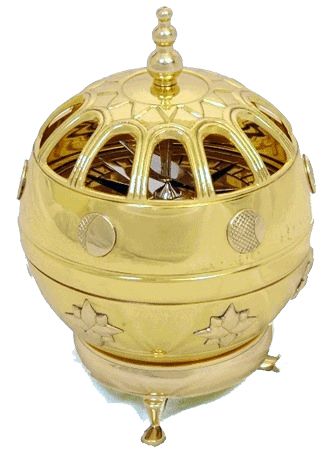
“two spindles; and the one pointed the way whither [they] should go into the wilderness”
It is interesting to note that the Liahona was stated to have “two spindles; and the one pointed the way whither [they] should go into the wilderness” (1 Ne 16:10). Why does he say that only one pointed the way? What was the other doing? Later after the broken bow incident and some subsequent humbling and repentance Nephi “beheld the pointers which were in the ball, that they did work according to the faith and diligence and heed which we did give unto them” (1 Ne 16:28). That certainly fits for how the spirit works in our lives, but then he notices something new, more than he had previously experienced with this divine director. “And there was also written upon them a new writing, which was plain to be read, which did give us understanding concerning the ways of the Lord; and it was written and changed from time to time, according to the faith and diligence which we gave unto it.” (1 Ne 16:29)
The symbology to me is beautiful. We have two pointers within our personal Liahona, the first can be thought of as representing the light of Christ, its primary function is to point the way to go, it is more basic and rudimentary, giving “yes”, “no”, “do this”, “don’t do that”, “go this way”, “don’t go there” sort of directions. If followed, as Lehi’s company found, it will lead us to receive more knowledge as the second spindle comes into play. The second spindle can be thought of as the Holy Ghost, the Testator, the Revelator, the Comforter, through which we receive “a new writing, which was plain to be read, which did give us understanding concerning the ways of the Lord” (1 Ne 16:29). Alternatively the spindles can be thought of as having two functions, to point the way (light of Christ, more constant and ongoing), and to give “us understanding” (Holy Ghost, “written and changed from time to time”). When we receive direct revelation, knowledge and intelligence, as words in our mind, we are receiving them through the Holy Ghost.
Nephi’s account of getting the brass plates is a good example. He states he “was led by the Spirit, not knowing beforehand the things which [he] should do” (1 Ne 4:6). This initial guidance is giving him basic direction, a function of the light of Christ. When he finds Laban he states that he was “constrained by the Spirit” (1 Ne 4:10) to kill him, basically a prompting, also likely through the light of Christ. He then receives direct knowledge, teaching, and revelatory explanation from the Spirit. The classic scripture follows “Behold the Lord slayeth the wicked to bring forth his righteous purposes. It is better that one man should perish than that a nation should dwindle and perish in unbelief” (1 Ne 4:13). This is the Holy Ghost performing his function as a revelator and testator.
As previously stated, whether we’re looking for direction or actual revelation, our compass works “according to the faith and diligence which we [give] unto it” (1 Ne 16:29). Using the words of Alma; “[It works] for [us] according to [our] faith in God; therefore, if [we have] faith to believe that God could cause that those spindles should point the way [we] should go, behold, it [will be] done” (Alma 37:40). Having such faith and diligence our compass will lead us in the most fertile parts of our wilderness and like Nephi, eventually to the “top of the mountain, according to the directions which were given upon the ball” (1 Ne 16:30). Yet if we, like Laman and Lemuel on the ship, rebel against the light, it stops working for us and we will “not progress in [our] journey; Therefore, [we tarry] in the wilderness, [and do] not travel a direct course, and [are] afflicted with [spiritual] hunger and thirst.” (Alma 37:41-42)
Breaking the Bow/Fetal Development
Now that we’re actually moving into the wilderness, our roadmap of the covenant path, the Tree of Life, in one hand and the Liahona/Iron Rod in the other, are there other hints of symbolism and teaching that can be gleaned from the allegory? Well one of the first things we encounter in the Lehi narrative is that wilderness travel is hard! Nephi breaks his bow, and there follows hunger, uncertainty, murmuring, and fighting. In short, the allegory describes a period of great struggle, does that sound like pregnancy to you? Anyone that has experienced it can attest to the many great strugglings that child is having in the womb as they kick ribs, stretch, and jump on their homemade bladder trampoline usually in the middle of the night! Just ask Issac’s wife Rebekah with her twins Esau and Jacob, who from the get-go were at odds with each other as “the children struggled together within her” (Genesis 25:22). Most of us make this wilderness journey alone but if we’re so lucky to have a companion or two, prepare for even greater strugglings. I can hardly get my kids to share a room without fighting much less share a womb! Can’t even imagine!
Death of Ishmael/Miscarriage and Stillbirth
The next event we encounter during the journey is the death of Ishmael. Certainly, no description of the wilderness travel we call pregnancy would be complete without a solemn and mournful discussion of death that can accompany such travel, represented by miscarriage and stillbirths. No one can understand the grief of a mother and father in losing a child, unless they have experienced it. It would seem self-evident, that the farther along the pregnancy is, the harder the loss of the child would be, but early pregnancy miscarriage as well as stillbirth can be extremely traumatizing and leave the parents grief-stricken. Everyone that has felt the excitement and anticipation of a new child, starting into their own wilderness journey, only to be cut short, never to see the land of Bountiful that is being prepared for them, understands the sense of loss and sadness that follows. Yet this is a very real part of the journey as approximately one in five, 20%, of all pregnancies end in miscarriage, although the number of stillbirths is much less. What happens to these valiant wilderness travelers whose life is cut short before they finish the first stage of the allegory?
Elder Joseph Fielding Smith wrote that “there is no information given by revelation in regard to the status of stillborn children. However, I will express my personal opinion that we should have hope that these little ones will receive a resurrection and then belong to us.” (Doctrines of Salvation, 2:280.) Elder Bruce R. McConkie echoed this sentiment, in referring to the aforementioned first presidency message, “The Origin of Man”, he expressed his opinion that the message “appears to bear out the concept that the eternal spirit enters the body prior to a normal birth, and therefore that stillborn children will be resurrected.” (Mormon Doctrine, 2d ed., Salt Lake City: Bookcraft, 1966, p. 768.)
While these statements are comforting, they are referring in particular to stillbirths, and not miscarriages. Still, I’d like to think that our discussion earlier about moving into the wilderness, the doctrine of “quickening”, gives some insight on when the spirit is tied to the body, when the eternal bond is formed and a soul is born, and hope for those that find themselves in this situation. And if the interpretation of the allegory is correct, it is quite early in the journey, for they still had 8 years of travel ahead of them. Certainly our God, that numbers every hair of our head that not one is lost, and through the power of the resurrection of Christ, brings back together the bodies and spirits of those buried at sea, burnt to ashes, or completely transformed back into the dust of their mother Earth, has all power to do so. He, who will make the old bodies of the dead become young again, has the power to make the premature bodies of the young become older and viable. Still, we leave this trial in His merciful hands, acknowledging that all things will be done according to His wisdom and grace.
Whenever that cutoff will be we rejoice with Joseph Smith who, in answering the question “Will mothers have their children in eternity?” answered exuberantly, “Yes! Yes! Mothers, you shall have your children; for they shall have eternal life, for their debt is paid.” (History of the Church, 6:316; from a discourse given by Joseph Smith on Apr. 7, 1844, in Nauvoo, Illinois). Later, he similarly stated, “Children…must rise just as they died; we can there hail our lovely infants with the same glory—the same loveliness in the celestial glory.” (History of the Church, 6:366; from a discourse given by Joseph Smith on May 12, 1844, in Nauvoo, Illinois). What a glorious and blessed day that will be.
Raw Meat/Nourishment
The last little tidbit we get from Nephi about their wilderness travel is that they lived on “raw meat” (1 Ne 17:2). Raw meat? Why? Gross! Why not just cook up those “wild beasts”, make some wild beast stew, or beast steaks, or wild beast burgers?! Well we learn that they were actually commanded by the Lord to eat in this way. “For the Lord had not hitherto suffered that we should make much fire, as we journeyed in the wilderness; for he said: I will make thy food become sweet, that ye cook it not” (1 Ne 17:12). Now, maybe there were legitimate reasons not to make fire, and maybe I’m looking too much into it, but I see symbolism here too! We travel this wilderness path into mortality in the darkness of the womb. Little if any light is perceptible through the abdominal and uterine wall; no wonder they’re so mad with eyes clenched tight after delivery! Perhaps this is why they were instructed to not make fire while in the wilderness?
The more poignant symbology I find in the subsisting on raw meat. I see this as an allegorical teaching of the nourishment of fetus, subsisting on the raw nutrients obtained through the placenta and umbilical cord. Nutrients that it cannot obtain on its own, but must be provided through a kind and loving parent. In this way the Mother, is representative of our Heavenly Father, providing nourishment and raw sustenance to her little band of wilderness travelers, doing for them what they cannot do for themselves. It can be said of our mothers, as it was said of our Heavenly Father in the allegory, that they “doth nourish [us], and strengthen [us], and provide means whereby [we] can accomplish the thing which he (our Heavenly Father) has commanded [us]; wherefore, [she] did provide means for us while we did sojourn in the wilderness” (1 Ne 17:3). Thank you Mom.
Entering the Land of Bountiful/Birth
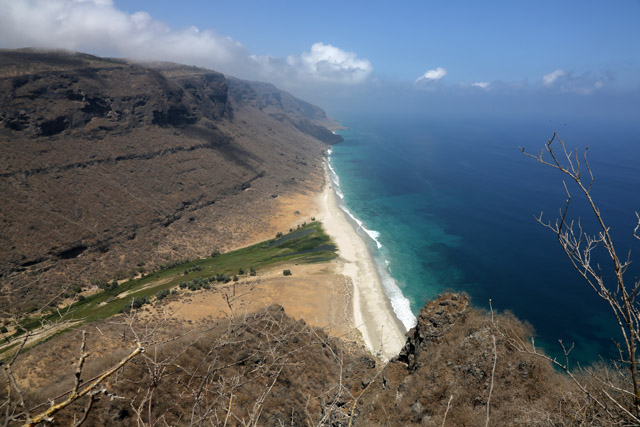
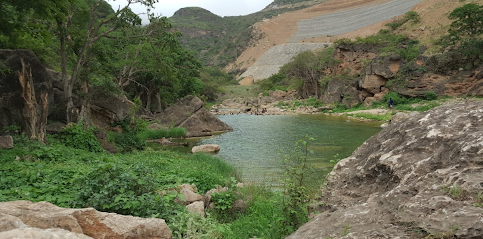
We end the 8+ years of wilderness journey as we end the 8+ months of pregnancy, entering into the Land of Bountiful. While the subsequent chapter will address the Land of Bountiful more directly, I find the imagery into the land on par with the allegorical teaching of the Book of Mormon. It is thought that the most likely site for the land bountiful is somewhere along the Dhofar coast in Oman. Permit me to do another familial shout-out to my Grandfather who was the first LDS explorer to attempt to map out the Lehi trail and potentially identify Bountiful, way to go Grandpa! He theorized that Lehi followed the well known ancient frankincense trail that followed the eastern border of the Red Sea, and then turns eastward to end at a coastal port called Salalah (Lynn M. Hilton and Hope A. Hilton, In Search of Lehi’s Trail, Salt Lake City, UT: Deseret Book, 1976). Further research has identified the ancient adjacent port of Khor Rori, a few miles to the east to be a very favorable spot (George Potter and Richard Wellington, Lehi in the Wilderness, Springville, UT: Cedar Fort, Inc., 2003). While other research has identified Khor Kharfot 60+ miles to the west as a possibility (Warren P. Aston, The Arabian Bountiful Discovered? Evidence for Nephi’s Bountiful, JBMS 7/1, 1998: 4–11). Wherever Bountiful may be, each proposed site is an inlet. You must come down from the Arabian wilderness, passing through the Dhofar mountains on either side into the fertile valleys that lead to the sea. These valleys are called “wadis”, that typically are dry except during the rainy season when they can flood.
What beautiful symbology of the process of birth! To reach our own Land Bountiful, and end our own wilderness journey we call fetal development, we too must “come down”, a process that mothers know all too well as “dropping”. The water breaks, correlating to the flooding wadi. We then begin to pass through the appropriately named “birth canal”, akin symbolically to the canals and valleys that lead through the Dhofar mountains that Lehi’s caravan had to pass through. I find the imagery of the Wadi Sayq, that leads to Khor Kharfot, particularly illustrates the point:


Finally, after this long and difficult journey, after “wad[ing] through much affliction” (1 Ne 17:1), we enter into the Land of Bountiful, a process we call birth. Surely we who have been born, and our mothers that have birthed us, can say with Nephi, “notwithstanding we had suffered many afflictions and much difficulty, yea, even so much that we cannot write them all, we were exceedingly rejoiced when we came to the seashore” (1 Ne 17:6)! Our wilderness travel into this world has ended but our journey is just beginning, now onto the Covenantal Path ahead!
Global Timeline
We’re back to the Reformation of the 16th century. While this was more of a large scale movement spanning many years, with multiple events, it can be thought of as a wilderness journey. A process, like the development of a child, that was replete with sufferings and pain, as fledgling protestant groups sprung up, grew, and developed in their mother lands. Ultimately, like Lehi, many would leave their mother lands and congregate in the more favorable lands and countries of central Europe, particularly Germany, Scandinavia, and England. Here Protestantism was “birthed” so to say, or at least was able to survive, away from the Papal roots from whence it sprang. Yet this “Land of Bountiful” was not to be their “Land of Promise”. A great sea of “many waters” (1 Ne 17:5) separated them. Still a time of respite, growth, and recovery was needed before the next leg of the journey.
Personal Timeline
| Personal Timeline | Book of Mormon Timeline |
| Pre-mortal Existence | Jerusalem |
| Leaving Home | Leaving Jerusalem |
| Baptism | Cross the Oceans |
No, I don’t remember anything from my embryonic development and birth either. But I have been through, or at least observed the process, with my four beautiful children, and even delivered the last two. What a thrill it is to feel the first movements of the child, to see the progression as they become stronger and more developed through this difficult journey, and ultimately to pass through their canal into the land Bountiful that was our family. Each was a stressful and painful process ending in relief and joy. Our first was naturally the most difficult. After 24 hours of labor forceps were finally required. Poor little guy came out posterior facing (face-up), with the umbilical cord wrapped around his neck twice! He was as blue as a blueberry, I thought for sure the OB had killed him! Luckily he was quickly attended to and all went well.
We did have one miscarriage that followed our first. It was very early in pregnancy and we naturally had many of the same questions that were addressed in the preceding paragraphs. Despite it being very early in the first trimester it was still very difficult for us, particularly for my wife. While praying on the matter one night I felt very strongly that the body prepared for our baby wasn’t suitable and that the same spirit child was still coming into our family, just at a different future time when the circumstances were right. We got pregnant a few months later and had our second child, a boy, who was born with a cleft. A very special young man (as they all are), that needed a special body to help him with the mission that his Father in Heaven intended for him. This led to a series of miracles that continues to strengthen the faith and testimony of all the members of our family today. A series of apparent trials, that the Lord, in his infinite wisdom, has turned to great blessings, as he always does for those that trust in Him.
 The Way